AI models still need expert human audit
Oct 02, 2026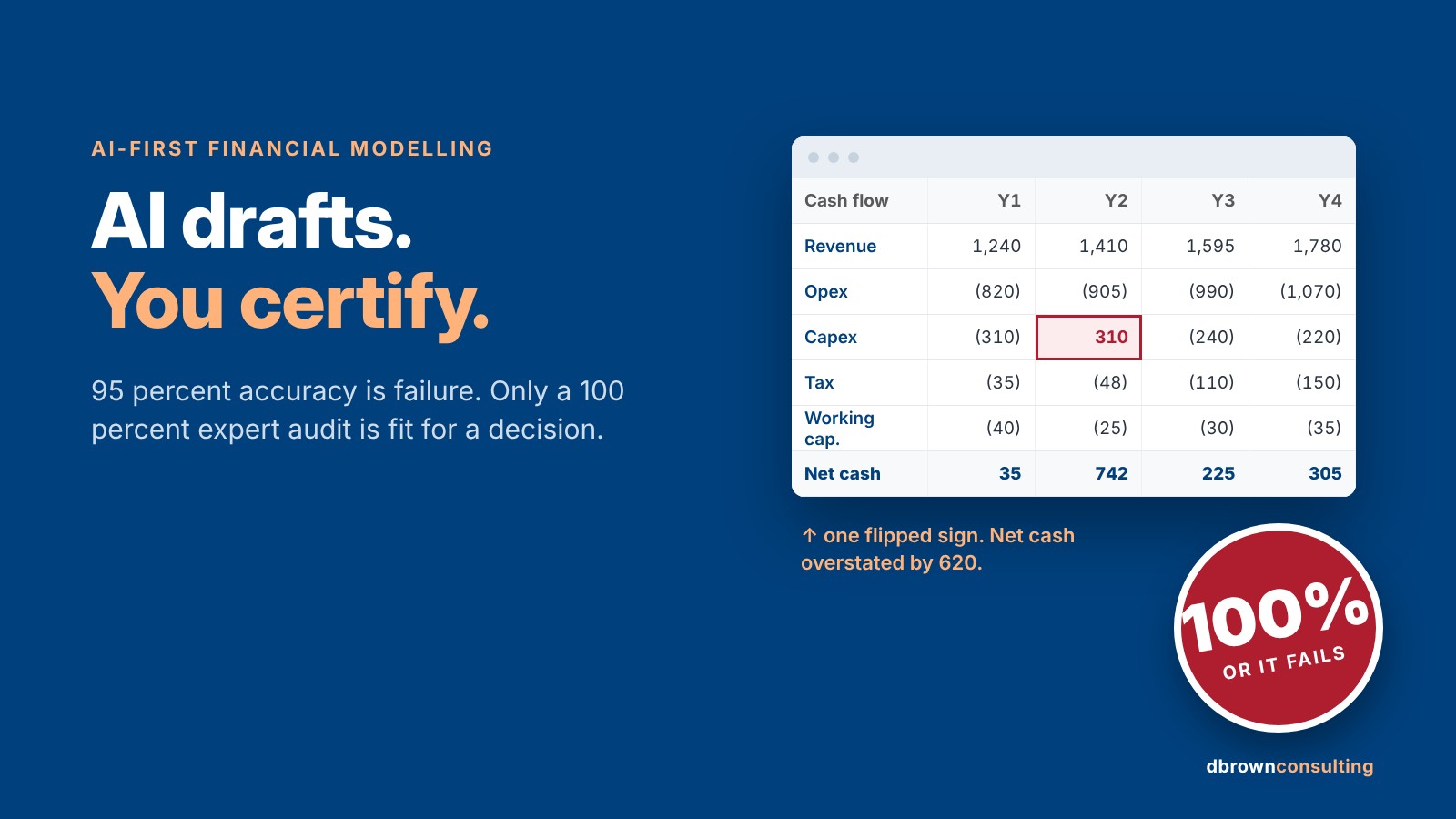
Treat 95 percent as failure. Certify mechanics end to end before anyone decides.
AI drafts the model, you own the risk
AI can assemble large parts of a financial model quickly, but the standard you accept cannot change. In this work, 95 percent accuracy is failure and only 100 percent is acceptable.
You still need an expert audit from first input to final output. The machine can draft, you certify. That is how you keep speed without moving risk onto the business.
Start with the conclusion in mind. If a decision will ride on the outputs, the model must meet a zero‑defect bar on mechanics before anyone sees a chart or a number.
Small mechanical errors topple big decisions
A single mechanical error can invert an answer, and with it, the decision. A misplaced sign, a broken reference or a stray assumption can flip cash from positive to negative.
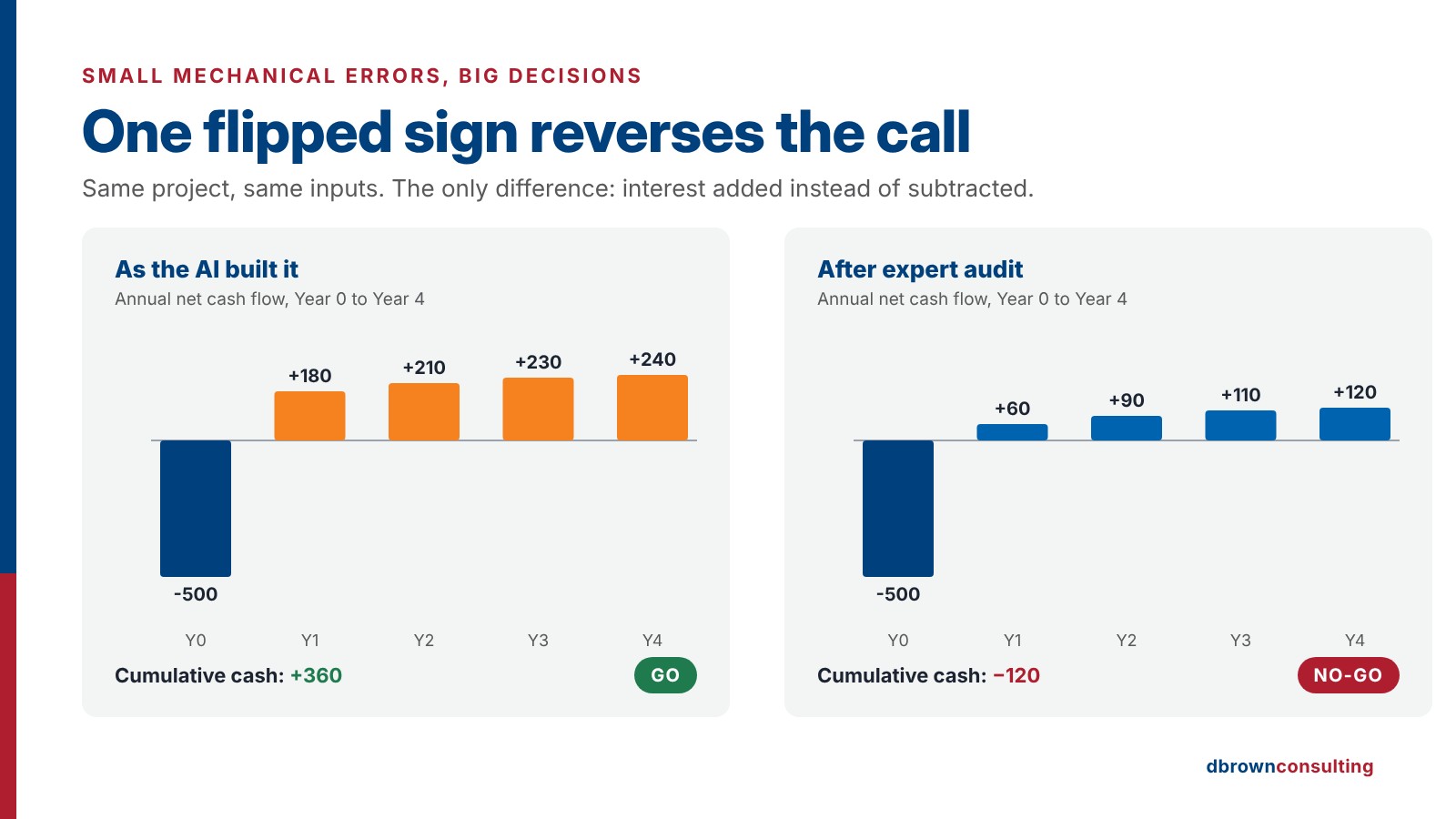
In our context, where cash cycles are tight and rates move, that kind of miss is costly. A model that is almost right can still send a team into a bad commitment.
When the cost of being wrong is real, you do not average it out. You remove the fault before you let the model speak for you.
Audit the mechanics before the story
Read the model like a map. Start at the key outputs, trace each line back to its inputs, and confirm every step. You are checking mechanics, not aesthetics.
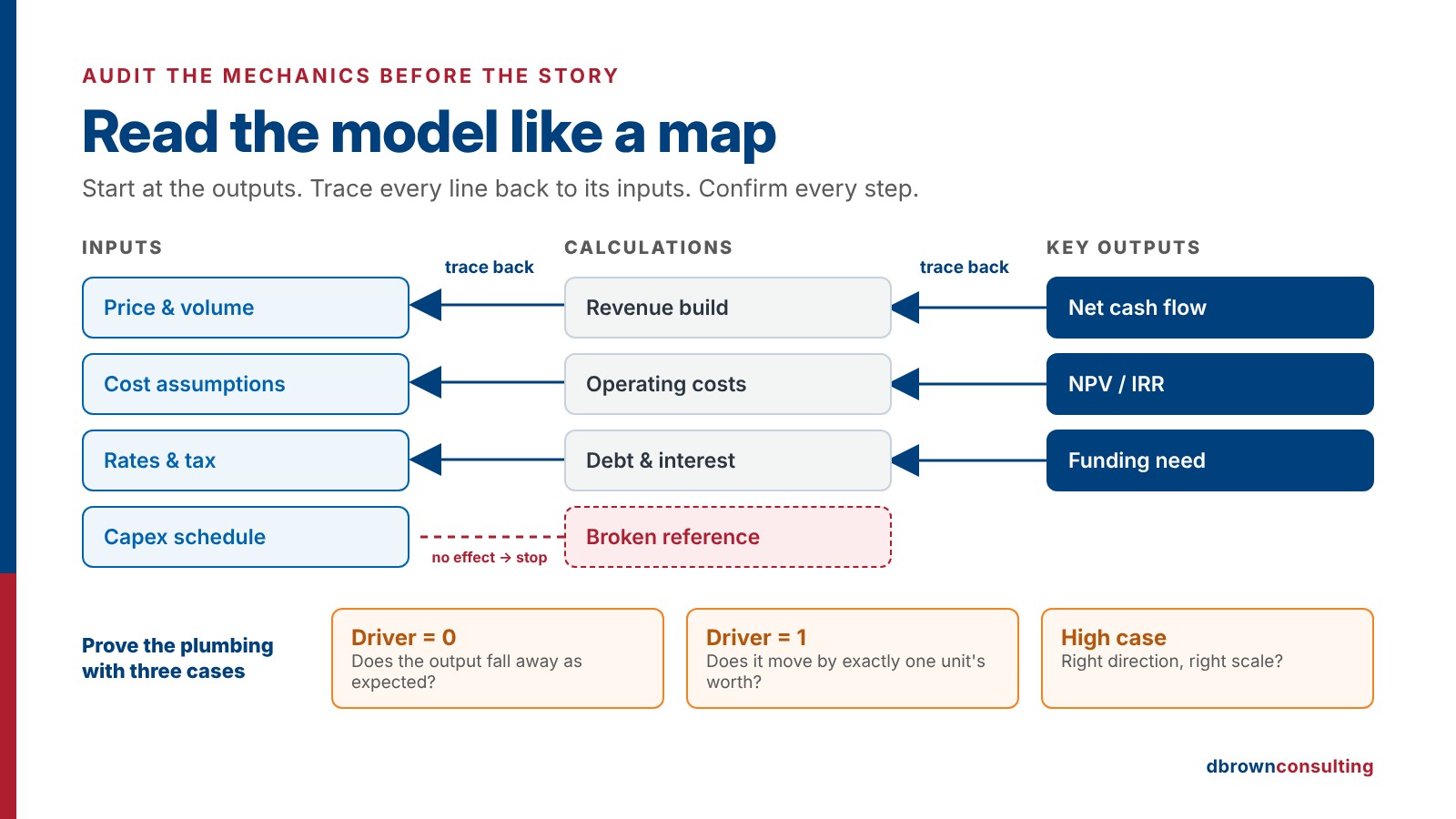
Confirm that each input is where it should be, and that changing it moves the outputs in the direction and scale you expect. If an input does nothing, or moves the wrong way, stop and fix that path.
Run simple scenarios. Set a driver to zero, set it to one, and push a high case. The point is not realism, it is to prove the plumbing is sound.
Set a 100 percent bar and make it visible
Treat the audit as a formal step, not a glance. Write down the checks you run every time and use the same list on every model the AI helps build.
Separate building from certifying. The person who accepts the model for decision use is not the person who drafted it. That separation keeps you honest when time is tight.
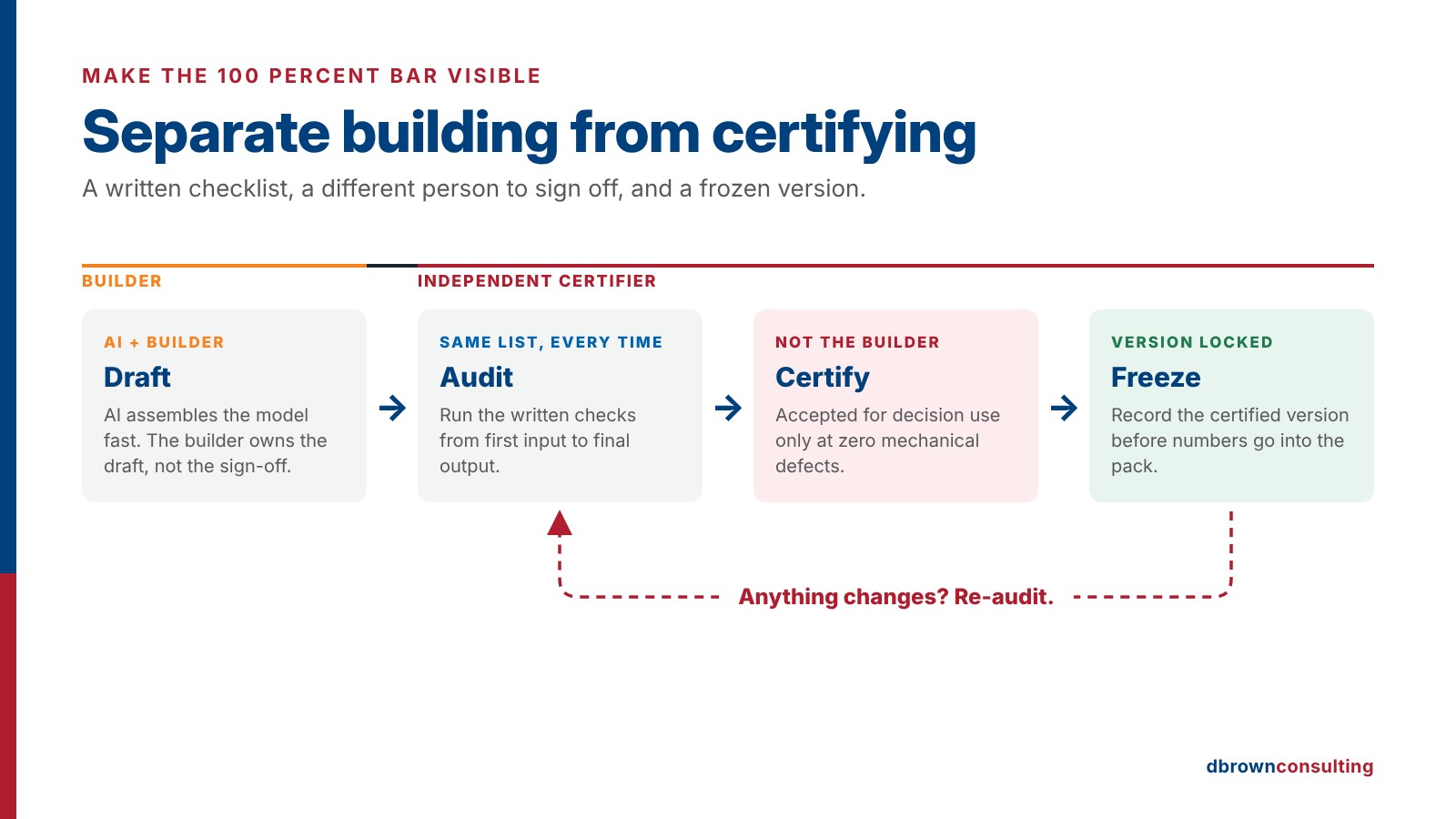
Record the version you certified and freeze it before the numbers go into a pack. If anything changes, you repeat the audit. That is how you avoid silent drift.
Do this this week: run a two‑pass audit on one live model
Pick one AI‑assisted model that will inform a decision. Run two passes before it moves on.
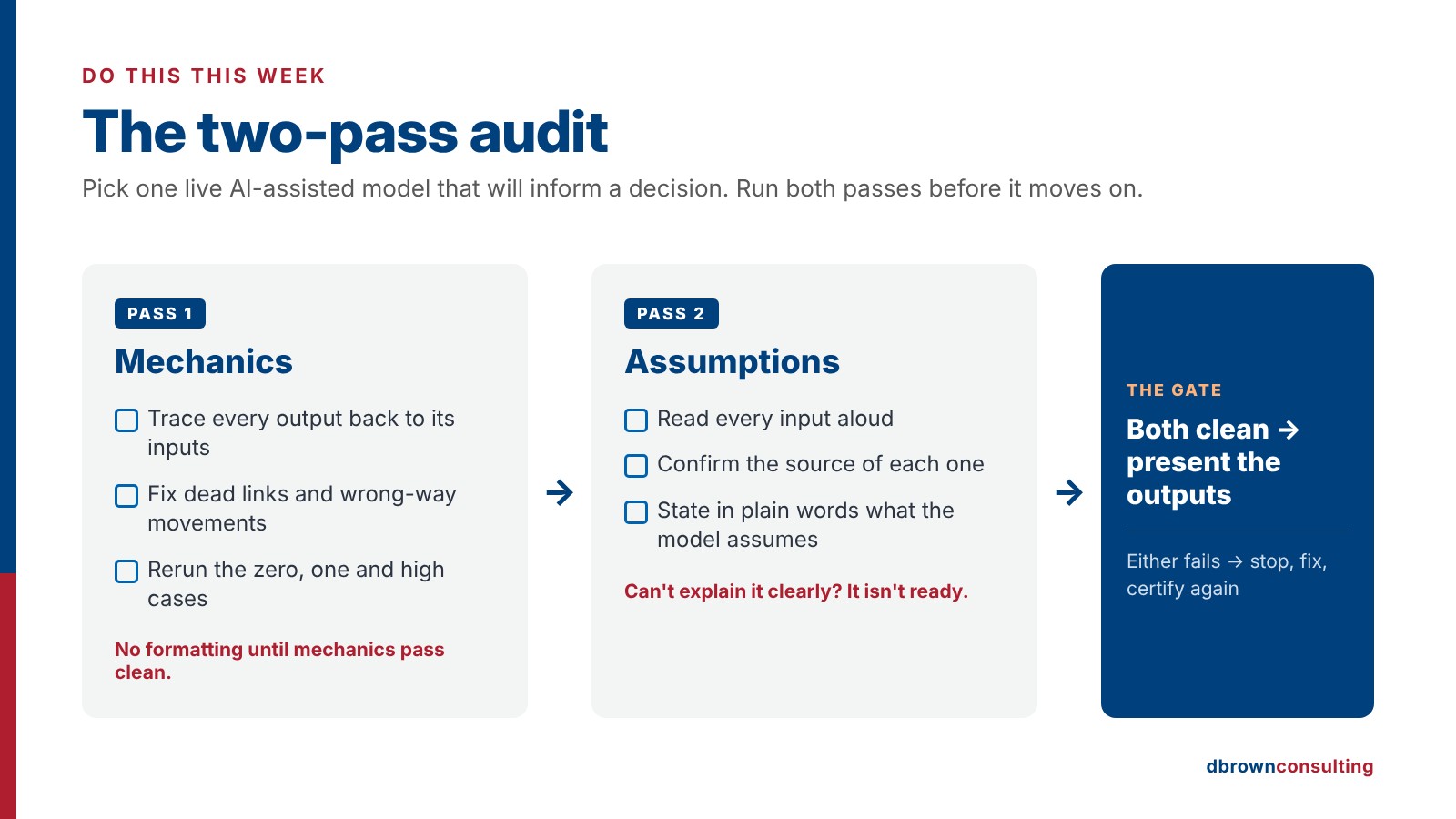
First pass, mechanics: trace outputs to inputs, fix any dead links or wrong‑way movements, and rerun the three simple scenarios. Do not touch formatting until the mechanics pass clean.
Second pass, assumptions: read every input aloud, confirm its source, and state in plain words what the model assumes will happen. If you cannot explain an assumption clearly, it is not ready.
When both passes are clean, you may present the outputs. If either fails, stop the process, fix it, and certify again.